



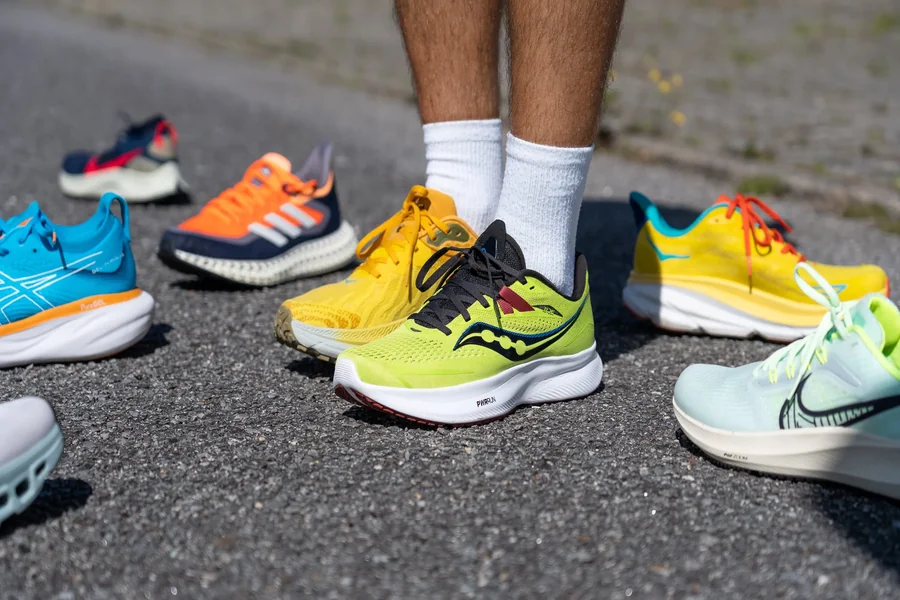
Not all shoes that look sporty are built to run in. A proper running shoe is engineered for one repeated motion: your foot landing and pushing off, thousands of times a run. Get the wrong pair, and you feel it in your knees, shins, and arches within a week. Get the right pair and running feels lighter and safer.
Why Does the Right Running Shoe Matter for Men?
Running puts real force through your body. Each stride lands with several times your body weight, and your shoe is what absorbs and redirects it. The right pair protects you and makes the effort feel easier. Here is what a good running shoe does for you.
- Protects your joints: Cushioning soaks up impact so less of it reaches your knees and ankles.
- Improves each stride: A responsive sole returns some energy, so you waste less effort on every step.
- Reduces injury risk: The right support and fit cut down the rubbing and strain that cause blisters and aches.
- Lasts the distance: A running-specific build holds up to repeated impact far better than a casual shoe.
What Should You Look for in Men’s Running Shoes?
When you compare men’s running shoes, a few features do most of the work. Judge a pair on these before anything else, and browse the cushioned running range to see how they come together.
Cushioning That Absorbs Impact
A cushioned midsole is the heart of a running shoe. Look for a foam that feels supportive rather than mushy, and one that springs back. Energy-return foams like ETPU give a livelier ride, which helps on longer runs and keeps your legs fresher afterwards.
A Fit That Locks You In
Your heel should stay put while your toes have room to spread. Aim for a thumb’s width at the front and a snug, blister-free heel. A secure lace-up keeps the midfoot steady on every stride, which matters more the further you run.
A Breathable, Grippy Build
A mesh or knit upper lets heat escape on warm runs, and a rubber outsole with a real tread pattern grips road and track. Together they keep you cool and steady, whatever the surface under your feet.
Which Running Shoe Suits Your Type of Runner?
Not every runner needs the same shoe. Match the pair to how, where, and how much you run. The full men’s footwear range covers most needs.
The Beginner or Occasional Runner
If you run a couple of times a week, prioritise comfort and cushioning over speed features. A soft, supportive daily shoe makes starting easier on the body and keeps early runs enjoyable rather than punishing.
The Regular Daily Runner
Clocking regular kilometres calls for a durable, responsive shoe that holds its cushioning. An energy-return sole rewards the extra distance and keeps long runs feeling fresh, while a hard-wearing outsole keeps its grip.
The Heavier or High-Mileage Runner
More weight and more miles mean more impact, so look for extra cushioning, a supportive structure, and a durable build. A shoe that feels firm and stable underfoot will outlast a soft, thin one and protect your joints better over time.
Does the Surface You Run On Change the Shoe?
Where you run matters as much as how far. The ground under your feet decides how much grip and cushioning you need, so match the shoe to your usual route.
- Road and pavement: Hard surfaces send more shock up your legs, so lean towards more cushioning and a durable outsole that resists wear.
- Treadmill: A lighter, flexible shoe works well indoors, where grip matters less and a smooth, cushioned ride is the priority.
- Track: A responsive, lighter shoe suits the even surface, letting you feel the energy return on each stride.
- Mixed routes: If you switch between road and light trails, a versatile daily trainer with a grippy sole covers both without fuss.
Most Indian runners mix road and treadmill through the week, so a well-cushioned, durable daily shoe is the safe all-rounder. Pick a specialist only once you know your running settles into one surface.
How Do You Get the Fit Right?
Even the best shoe fails if the fit is wrong. A few simple checks save you weeks of discomfort and wasted money.
- Measure both feet: Feet differ, so fit the larger one and check the size against a chart.
- Shop later in the day: Feet swell as the day goes on, so an evening fit is more honest.
- Wear running socks: Try the shoe with the socks you will actually run in.
- Test the movement: Walk and jog a few steps. Your heel should not slip, and your toes should not jam.
Find the Pair Built for Your Run
The best men’s running shoe is the one matched to your feet and your running, not the flashiest pair on the shelf. Lead with cushioning, fit, and grip, pick for your runner type, and get the fit right. Do that, and every run feels lighter and safer.
Asian Footwears builds running shoes for real Indian roads and runners, with cushioning tech and breathable uppers at a value price. Every pair comes with Free Delivery, Hassle-Free Returns, and Asian Flash 60-minute delivery in supported pincodes.
Shop the men’s running shoe collection and find a pair built for the way you run. Shop Now and become an AsianRider today.
FAQs
What should I look for when buying men’s running shoes?
Focus on cushioning, fit, breathability, and grip. A supportive, springy midsole protects your joints, a snug heel with toe room prevents blisters, and a grippy outsole keeps you steady. Match the pair to how often and where you run.
How often should I replace my running shoes?
Most running shoes last several hundred kilometres, often a few months of regular running. Replace them once the cushioning feels flat or the tread has worn smooth, since a tired shoe stops protecting your joints. Rotating two pairs extends their life.
Are running shoes different from regular sports shoes?
Yes. Running shoes are built for repeated forward impact, with cushioning and a flexible, grippy sole tuned for that motion. General sports shoes spread their design across many movements, so a dedicated running shoe serves a runner better.
What size running shoe should men buy?
Fit your larger foot, leave about a thumb’s width at the toe, and keep the heel snug. Try shoes later in the day when feet are slightly swollen, and always with running socks. Sizes run in UK measurements, so check against a size chart.
Which men’s running shoes are best for heavy runners?
Heavier runners should look for extra cushioning, a supportive and stable structure, and a durable build that resists breaking down. A firmer, well-built shoe handles the added impact better than a soft, thin one over time.
